Beyond the Clubhouse: Lifelong Learning on Florida's Gulf Coast
Retirenet Media Team


 0 Recommendations
How Gulf Coast 55+ communities open doors to school, skills, and reinvention
There's a particular kind of quiet that settles over a moving truck once the last box is unpacked. The furniture is arranged, the boxes are flattened, and for the first time in decades, the calendar is empty. No school drop-offs. No commute. No performance review looming in Q3. For the person who has just moved into a 55+ active adult community along Florida's Gulf Coast, that silence can feel like relief — or it can feel like standing at the edge of a pool without knowing how deep it is.
This is the paradox of the second first day of school. It arrives with excitement and unease in equal measure, and understanding both is the key to actually enjoying what comes next — especially in a region as rich in learning opportunities as Southwest Florida.
The Joy: Permission to Be a Beginner Again
Somewhere around age forty, most people stop doing things they're bad at. It's not a rule anyone writes down — it just happens. Work rewards competence, not experimentation, and the risk of looking foolish in front of colleagues or kids quietly closes off entire categories of curiosity. The guitar gathers dust. The "I've always wanted to learn Spanish" thought gets filed away, permanently, under Someday.
Moving into a Gulf Coast 55+ community reopens that door, and for many new residents, walking through it is the best part of the whole transition. Nowhere is that more visible than at FGCU Academy (formerly the Renaissance Academy), Florida Gulf Coast University's non-credit lifelong-learning program serving Lee, Collier, and Charlotte counties since 2001. With hundreds of single lectures, short courses, film series, computer classes, and writing workshops offered every season — most for $25 to $44 a class, no exams, no grades — it has become one of the region's most-used resources for residents who simply want to keep learning for the joy of it. Classes meet at locations from the Atrium in Fort Myers to the FGCU Naples Center, with additional programming reaching Charlotte County residents near Punta Gorda and Port Charlotte.
For residents who want something more structured, Florida offers a genuinely excellent perk: under Florida Statute 1009.26(4), residents 60 and older can audit courses at any Florida public college or university tuition-free, on a space-available basis. It won't earn you credit, but it will get you into a real classroom — literature, history, art, even calculus — sitting alongside students a third your age, absorbing a subject purely because it interests you.
And for the more hands-on crowd, Charlotte Technical College in Port Charlotte runs both full career-track programs and short-form Continuing Education and Personal Enrichment courses (just a $5 application fee) in fields like Automotive Maintenance & Light Repair and Professional Culinary Arts & Hospitality. Residents who take these courses aren't always chasing a second career — often they just want to finally understand what's happening under the hood of their car, or stop burning the Thanksgiving rolls.
There's real joy in this, and it's not the shallow kind. Learning a new skill in later life — especially one that combines physical coordination with mental focus, like playing an instrument or working with your hands in a kitchen or a garage — is linked to measurable gains in cognitive resilience. But residents rarely describe it in clinical terms. They talk about the satisfaction of finally understanding how an engine actually works, the pride of a loaf of bread that doesn't come out like a hockey puck, and the simple joy of being called "beginner" again and not minding it one bit.
The Fear: What If I'm Too Old to Start?
Underneath the joy sits a quieter, more stubborn feeling: doubt. It shows up as a joke — "I'm too old for this" — but it's rarely just a joke. For many new residents, the fear isn't really about the skill itself. It's about identity. If you spent thirty-five years being the person who knew what they were doing, sitting in a classroom as the person who doesn't can feel like a demotion.
There's also a more practical fear lurking underneath: What if my body doesn't cooperate the way it used to? Fine motor skills, hearing, and eyesight shift with age, and a first pottery class or a first attempt at reading sheet music can surface that shift in an uncomfortable way. And then there's the social fear, which is often the biggest one of all: walking into a room of strangers, at a stage of life when making new friends is supposed to be harder, not easier.
The good news — and it's worth saying plainly — is that these fears are almost universally overstated once someone actually shows up. Instructors at programs like FGCU Academy will tell you the same thing again and again: the hardest part of any new class isn't the material, it's the doorway. Residents who make it through that first session almost never regret it.
The Prospects: A Longer Runway Than People Expect
Here's what tends to surprise people most: the runway ahead of them is longer than they think. A resident who moves to the Gulf Coast at 62 may reasonably expect two, three, even four more decades of active life. That is not a coda — it's a third act, and a long one. Framed that way, an auto repair class at Charlotte Technical College isn't just nostalgia for a garage from decades past — it translates into real independence and fewer mechanic bills. A cooking class builds a skill that pays dividends at every holiday gathering for the rest of a resident's life. And for those who audit a full semester at Florida SouthWestern State College or Florida Gulf Coast University under the senior tuition waiver, the return isn't measured in a paycheck. It's measured in the quiet confidence of proving, to no one but themselves, that the capacity to grow didn't have an expiration date.
Below are a few Gulf Coast communities where residents are putting that curiosity to work, each within easy reach of the region's best lifelong-learning resources.

The Preserve — Lake Suzy, FL
Florida's newest manufactured home community, nestled between Tampa/St. Petersburg and Fort Myers, The Preserve puts residents a short drive from both Charlotte Technical College's Continuing Education programs and FGCU Academy's Charlotte County offerings — making it easy to fill a fresh calendar with classes.
View The Preserve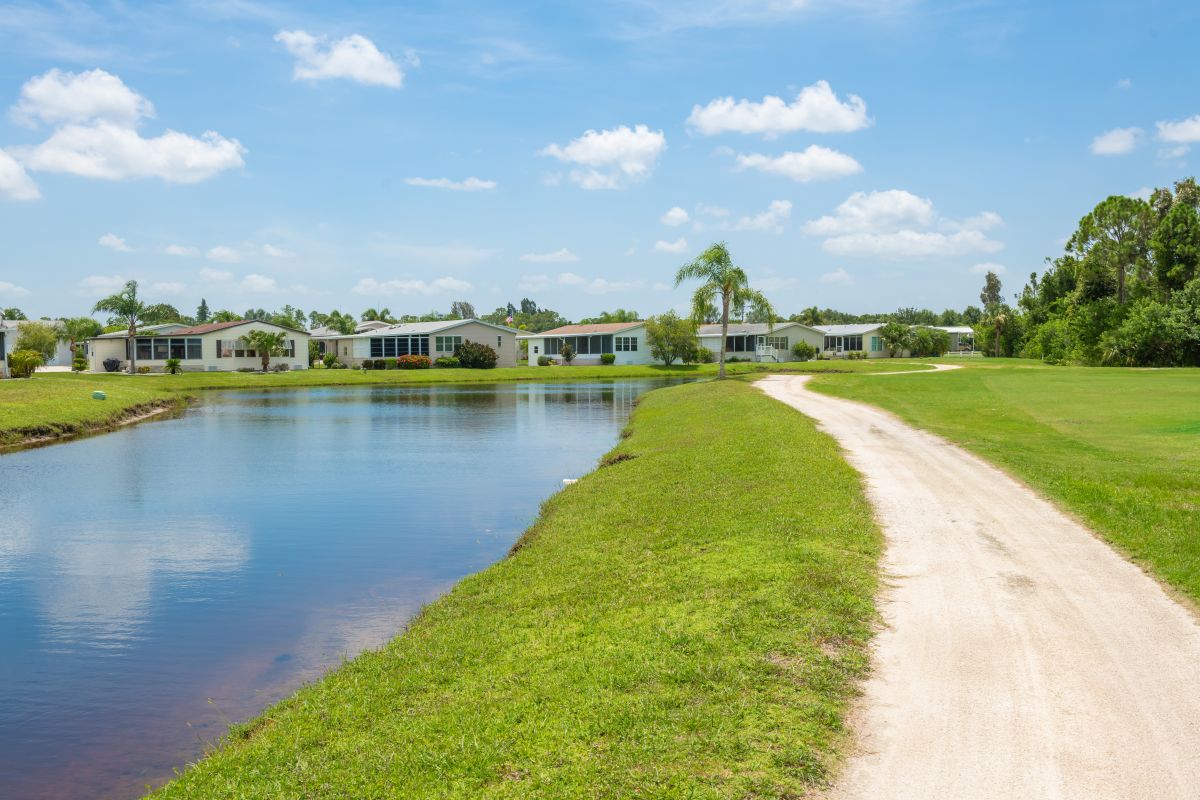
Blue Heron Pines — Punta Gorda, FL
Framed by 140 acres of pines and lakes on the Gulf Coast in Southwest Florida, Blue Heron Pines sits close to downtown Punta Gorda, giving residents easy access to Charlotte Technical College's culinary and automotive programs, plus FGCU Academy's Charlotte County course catalog.
View Blue Heron Pines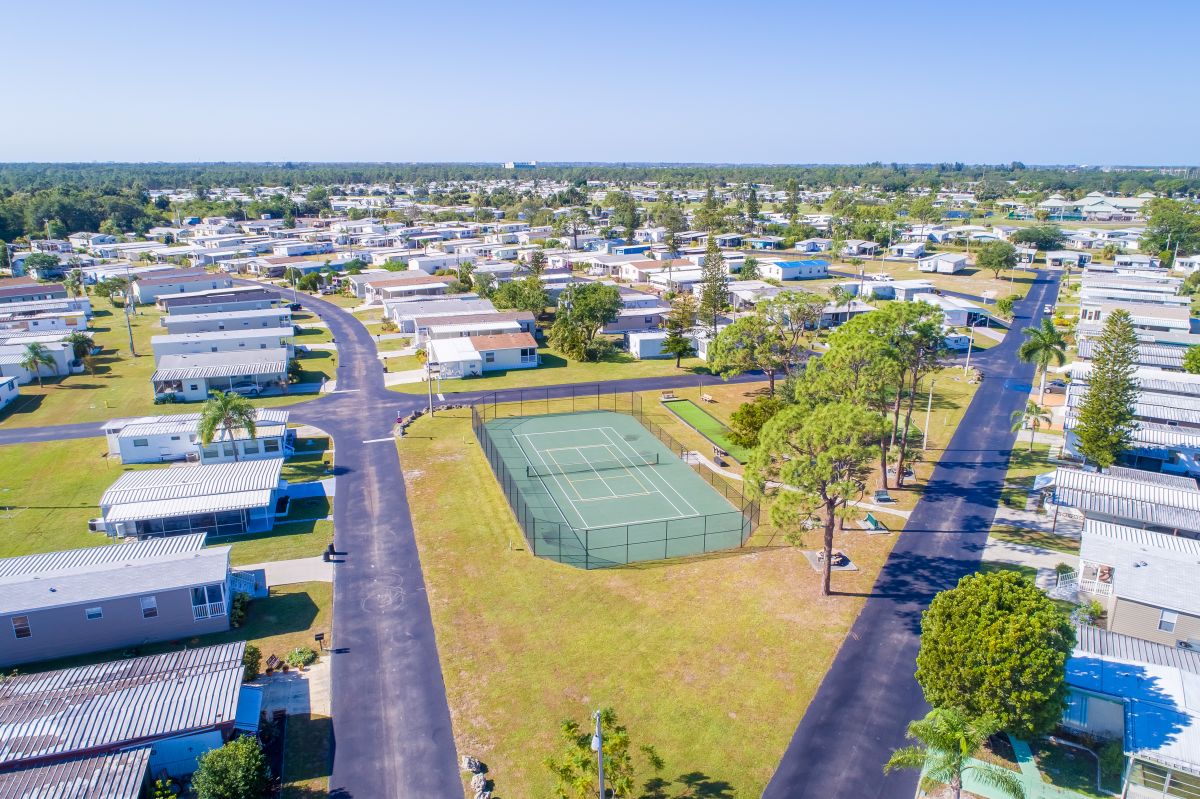
Serendipity — North Fort Myers, FL
A carefree 55+ community along the Caloosahatchee River, just minutes from the Gulf of Mexico. Serendipity's location puts residents close to Fort Myers's Atrium campus, home base for many FGCU Academy lectures, short courses, and computer classes.
View Serendipity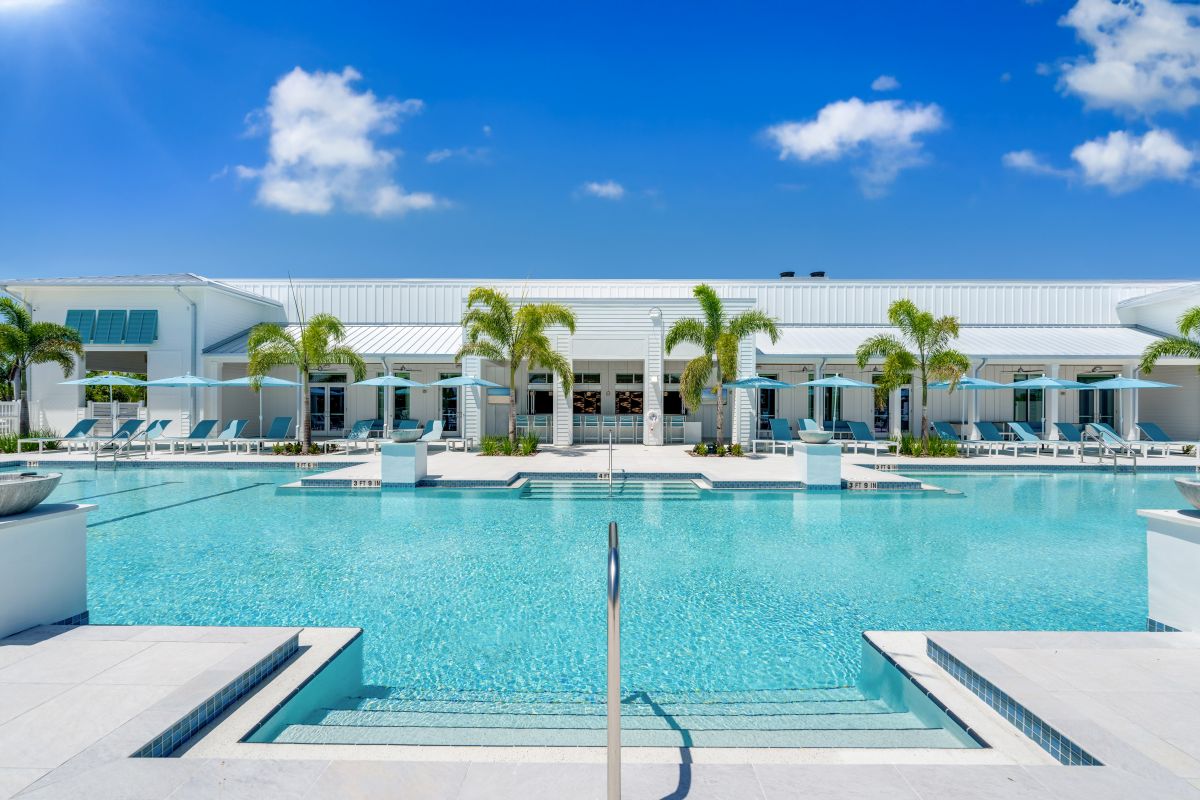
Bonita Terra — Bonita Springs, FL
A gated, casual-lifestyle community in Bonita Springs, positioned between Fort Myers and Naples — the two anchor cities for FGCU Academy programming, and within Florida's tuition-waiver reach of Florida Gulf Coast University itself.
View Bonita TerraThe Real Lesson
The 55+ community, at its best, isn't a retirement from ambition. It's a retirement from obligation — which is a very different thing. Freed from the calendar that once dictated every hour, Gulf Coast residents are discovering that curiosity doesn't age out. It just waits for room to breathe — and on Florida's Gulf Coast, that room comes with a lecture hall, a test kitchen, and sometimes a garage bay, all within a short drive of home.