|
Water has a way of settling a decision before the rest of the pros-and-cons list even gets written. Ask most 55+ homebuyers what they picture in retirement and you'll hear one of two answers: a dock at sunrise with coffee and a fishing rod, or bare feet in the sand with the tide rolling in.
Both are legitimate ways to spend the next chapter. But the daily texture of the two lifestyles is genuinely different, and the difference shows up in your maintenance bill, your insurance premium, your hurricane plan, and how far you drive for groceries. Below, we compare lake living and beach living across the categories that matter most to retirees, then point you toward real 55+ communities built around each.
|
|
|
1. Which Costs Less to Buy Into?
There's no single winner here, because "waterfront" prices swing wildly by ZIP code. A lakefront home on a trophy lake can outprice a modest home three miles from the ocean in a quieter coastal market, and vice versa.
What tips the scale toward lake living is selection. Lakes are scattered across nearly every state, which means retirees comparing communities in Florida, Georgia, the Carolinas, Tennessee, or Texas have a much wider range of price points to shop. Beach living is geographically boxed in — you're competing for a finite stretch of coastline, and that scarcity shows up in the price tag, especially anywhere within walking distance of sand.
Before comparing listing prices, retirees should also weigh:
- Homeowners and flood insurance
- HOA or community fees
- Dock, seawall, or shoreline upkeep
- Boat storage or marina fees
- Property taxes and local cost of living
Bottom line: Lake living generally offers more affordable entry points across more markets. Beach living can range from surprisingly attainable to very expensive, with the premium concentrated in the most walkable-to-sand locations.
|
|
|
2. Which Home Needs Less Upkeep?
Every waterfront property asks a little more of its owner than a home three streets inland. The difference is what it asks.
Beach homes contend with salt air, which quietly corrodes metal railings, HVAC units, window frames, and outdoor furniture faster than an inland home would ever experience. Add wind-driven sand and coastal humidity, and beach maintenance becomes a recurring line item rather than an occasional chore.
Lakefront homes have their own list — docks, boat lifts, seawalls, shoreline erosion, and drainage — but without the corrosive salt exposure. Before buying, ask who owns and manages the lake itself, how water levels are handled in dry years, and what the HOA says about docks and shoreline modifications.
Bottom line: Lake living typically wins on routine maintenance. Beach owners should budget specifically for the accelerated wear that comes with salt, wind, and humidity.
|
|
|
3. How Do Weather Risks Compare?
Gulf and Atlantic coastal communities carry real exposure to hurricanes, storm surge, and wind — factors that directly affect insurance cost and construction requirements. That risk doesn't disappear inland, though. Lake communities can face flooding, severe thunderstorms, tornadoes, wildfire, or drought-driven water-level swings, depending entirely on the region.
A lake in the North Carolina foothills and a lake in Arizona are two different climate stories, just as "beach" can mean the Gulf Coast, the Carolinas, or the Pacific Northwest. Region matters more than the water/coast label itself.
Bottom line: Lake living usually carries lower coastal-storm exposure, but every buyer should check flood zones, evacuation routes, and insurance availability specific to the property.
|
|
|
4. Which Is Better for Boating?
Call this one a draw with two very different flavors.
Lake boating tends to mean calmer, protected water — pontoon cruises, kayaking, paddleboarding, water skiing, and easy sunset outings, often right from a community dock or marina. Some communities do restrict motor size or personal watercraft, so it's worth checking the rules before you buy.
Coastal boating opens onto bays, the Intracoastal, rivers, and the open ocean — a bigger playground for serious boaters, offshore anglers, and sailors, with tides and currents as the tradeoff.
Bottom line: Lake living suits relaxed, low-drama boating. Coastal living suits retirees who want bigger water and longer-range adventures.
|
|
|
5. Which Wins for Fishing and Water Recreation?
Freshwater lakes deliver bass, crappie, catfish, and trout, plus swimming, paddleboarding, and wakeboarding — often all in one easy morning without leaving the community. Coastal living trades that convenience for range: surf fishing, inshore and offshore fishing, snorkeling, sailing, and miles of open shoreline for walking and shelling.
Bottom line: Lake living wins on easy, calm-water access. Beach living wins on sheer variety and scale of saltwater recreation.
|
|
|
6. Which Offers the Better Everyday Outdoor Lifestyle?
This one is genuinely a coin flip. Lake communities often sit near hiking trails, golf courses, state parks, and rolling terrain — mornings feel wooded and quiet. Beach communities feel open and breezy, with walking, biking, pickleball, and coastal parks woven into a more social, resort-style rhythm.
Bottom line: Pick the lake for quiet mornings on the dock surrounded by trees. Pick the beach for a breeze, a boardwalk, and more built-in social energy.
|
|
|
7. Which Is Better for Retirement, Specifically?
A vacation spot and a retirement home aren't the same test. The lake or beach view has to hold up on an ordinary Tuesday in February, not just during peak season. Before deciding, weigh healthcare access, everyday grocery and pharmacy proximity, airport distance, seasonal traffic and crowding, and how the community's social calendar looks in the off-season.
Bottom line: Lake living tends to suit retirees who want peace, nature, and a slower pace. Beach living tends to suit retirees who want dining, culture, and a more active social calendar built into daily life.
|
|
|
Pros and Cons at a Glance
|
Lake Living
Advantages
- Peaceful, wooded surroundings
- Calmer water for boating and paddling
- Often lower maintenance costs
- Wider range of affordable markets
- Lower coastal-storm exposure
Tradeoffs
- Some lakes restrict boat types
- Water levels can fluctuate
- Fewer dining options in rural areas
|
|
Beach Living
Advantages
- Ocean views and beach access
- Larger waterways for boating and fishing
- Coastal dining and entertainment
- Strong, social resort-style atmosphere
- Easy marina and waterway access
Tradeoffs
- Higher insurance in many markets
- Hurricane and storm exposure
- Salt-related wear on the home
|
|
|
|
Real Lake Communities Worth a Look
Freshwater living, docks, and quiet mornings on the water
|
 |
|
Twin Lakes at Avon Park — Avon Park, FL
A brand-new 55+ manufactured home community built around peaceful Lake Anoka. Kayak across the lake, cast a line from shore, or unwind at the Tiki Hut after a round of pickleball. A fully fenced dog park and a temperature-controlled pool round out the amenities.
|
|
 |
|
Lamplighter Village — Melbourne, FL
A lakefront 55+ community on Florida's Space Coast, pairing an active retirement lifestyle with quiet water views just minutes from local shopping and healthcare.
|
|
 |
|
Bonny Shores — Lakeland, FL
A premier 55+ manufactured home community set along picturesque Bonny Lake, with a clubhouse, heated pool, shuffleboard courts, and a close-knit, friendly atmosphere.
|
|
 |
|
Lake Griffin Isles — Fruitland Park, FL
A leisure-focused 55+ community for active adults, surrounded by scenic lakes and roughly 30 miles from Orlando for city trips when the mood strikes.
|
|
 |
|
The Preserve — Lake Suzy, FL
A newer, 5-star 55+ community on 523 acres between Tampa/St. Petersburg and Fort Myers, built around natural preservation areas and waterfront home sites.
|
|
|
|
Real Coastal & Waterfront Communities Worth a Look
Salt air, marina access, and easy days near the water
|
 |
|
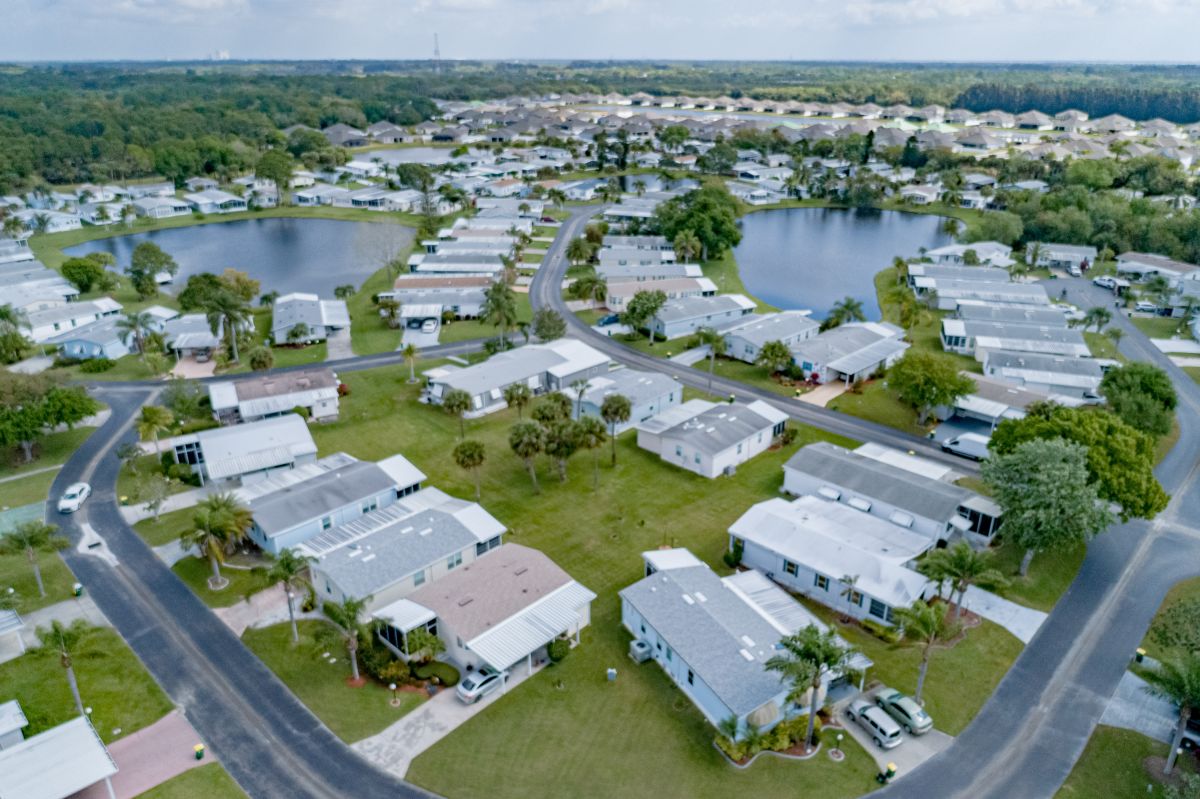
Riverside Club Golf & Marina Community — Ruskin, FL
A golf-and-marina 55+ community on the Little Manatee River with direct access to Tampa Bay and the Gulf of Mexico — dock your boat, then walk to an 18-hole championship course.
|
|
 |
|
Island Lakes — Merritt Island, FL
Tucked between Cocoa and Cocoa Beach, this 55+ manufactured home community sits just minutes from the ocean, giving residents beach access without beachfront maintenance.
|
|
 |
|
Crystal River Village — Crystal River, FL
A waterfront and coastal-adjacent 55+ manufactured home community on Florida's Nature Coast, known for its springs, manatees, and easygoing Gulf-side pace.
|
|
 |
|
Pelican Pier West — Ellenton, FL
A charming, 40-site manufactured housing community resting along the Manatee River on Florida's west coast, close to the Gulf beaches of Anna Maria Island.
|
|
|
|
Frequently Asked Questions
Is lake living cheaper than beach living?
Usually, yes. Lakes are found in far more markets, so there's more room to shop for value. Coastal real estate is limited by geography, which tends to push prices up, especially the closer you get to the sand.
Is a lake home easier to maintain than a beach home?
Generally. Salt air, wind, and humidity accelerate wear on beach-home exteriors, HVAC systems, and outdoor fixtures in a way lake homes typically don't experience.
Is lake living safer than beach living?
Lake communities usually carry less hurricane and storm-surge exposure, but they aren't risk-free — flooding, severe storms, and drought can all factor in depending on the region.
Which is better for retirees: lake or beach?
Both can work beautifully. Lake living suits retirees who want quiet, nature, and a slower pace. Beach living suits retirees who want coastal dining, culture, and a livelier social calendar.
|
|
|
Ready to See Which Lifestyle Fits?
Explore real 55+ lake and coastal communities on RetireNet.com, compare amenities side by side, and request free information directly from the communities that catch your eye.
Browse Waterfront Communities → |
|



 0 Recommendations