The 80/20 Rule for 55+ Communities
Retirenet Media Team


 0 Recommendations
Why a Handful of Decisions Drive Nearly All of Your Retirement Happiness
What Is the 80/20 Rule in 55+ Communities?
The Federal Housing Law Behind Age-Restricted Community Living
If you're researching 55+ active adult communities, you've probably come across the term "80/20 rule" and assumed it had something to do with amenities, priorities, or lifestyle planning. It doesn't. The 80/20 rule is a specific provision of federal housing law that determines whether a community legally qualifies as age-restricted housing at all. Understanding what it actually says — and what it doesn't — can save buyers from a common and costly misunderstanding.
What the Rule Actually Says
Under the Housing for Older Persons Act (HOPA), a community can qualify as "housing for older persons" if at least 80 percent of its occupied homes have at least one resident age 55 or older. The remaining 20 percent of occupied homes are permitted to house residents who don't meet that age threshold — think a younger spouse, a live-in caregiver, or an heir who inherited a property. Alongside the occupancy threshold, a qualifying community must also publish its intent to operate as age-restricted housing and follow procedures to verify residents' ages over time.
In other words, the "80/20" isn't a marketing phrase or a lifestyle guideline — it's a compliance formula. Communities that fall below the 80 percent threshold risk losing their legal age-restricted status altogether, which is why most well-run 55+ communities monitor occupancy carefully.
A Ceiling, Not a Requirement
One of the most common misunderstandings is treating the 20 percent allowance as a guarantee. It isn't. The rule sets a maximum share of homes that may house younger residents — it does not obligate any community to allow them. Many 55+ communities choose to enforce stricter age policies than federal law requires, capping younger occupancy well below 20 percent or prohibiting it outright through their own HOA rules. So even if a community legally qualifies under the 80/20 threshold, that says nothing about whether a specific home, lot, or neighborhood within it will actually welcome a resident under 55.
A community like Royal Palm Village in Haines City illustrates the point well — a gated, age-qualified community where residency policies are set locally by the HOA on top of whatever federal law technically permits.
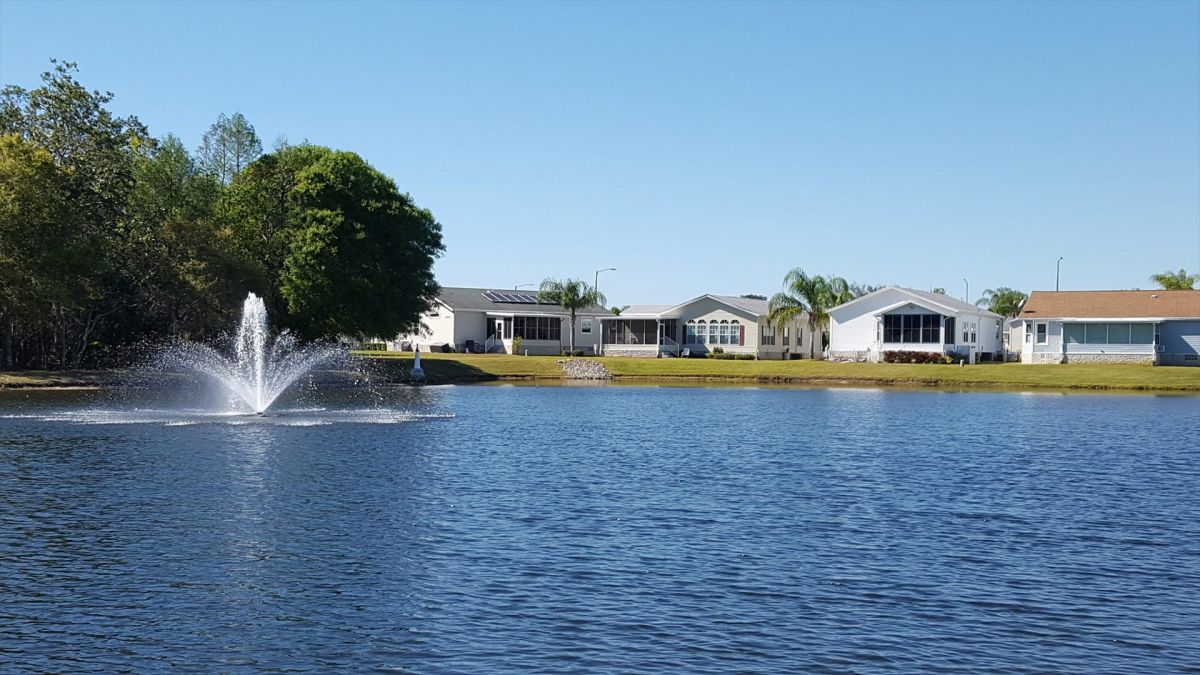
Royal Palm Village
3000 US Hwy 17/92 W, Haines City, FL 33844
A gated, age-qualified 55+ community where local HOA policy, not just federal minimums, shapes who can live on-site.
View CommunityDoes It Mean Kids Can Live There?
No — and this is where the confusion causes the most trouble. Qualifying under the 80/20 rule does not automatically mean children or grandchildren can live in a 55+ community as full-time residents. HOAs are still free to prohibit permanent residency by minors even in a community that meets the federal age-occupancy threshold. Guest stays are typically treated differently from residency, so a grandchild visiting for a week is not the same as a grandchild moving in. Every community sets its own occupancy and guest policies on top of whatever HOPA technically allows, so buyers with family situations that might involve a younger household member should ask directly rather than assume.
Southway Villa in Brooksville is a good example of a community where the HOA's own occupancy rules, laid out clearly for prospective buyers, matter just as much as the federal framework underneath them.

Southway Villa
7070 Daffodil Drive, Brooksville, FL 34601
A manufactured home community with clearly published occupancy policies that prospective buyers can review before purchasing.
View CommunityWhy This Matters Before You Buy
Confusing a legal occupancy threshold with a lifestyle guarantee can lead to unpleasant surprises after closing — whether that's discovering a caregiver can't move in as expected, or that a community is stricter about family residency than the federal minimum requires. The safest approach is to read the HOA's governing documents directly rather than relying on the 80/20 rule as a stand-in for community policy. That means asking specific questions: What is this community's actual occupancy policy for residents under 55? Are caregivers or inherited-property residents accommodated, and under what conditions? What are the guest-stay limits for grandchildren or other family?
Communities that are transparent about these policies up front, like La Costa Village in Port Orange, tend to make the buying process far smoother for prospective residents who want clarity before they commit.

La Costa Village
1275 La Costa Blvd., Port Orange, FL 32129
A resort-style 55+ community on Florida's Fun Coast with straightforward, published residency and occupancy guidelines.
View CommunityLarger Communities, Same Rule
The 80/20 threshold applies the same way regardless of a community's size or amenity level. A large, amenity-rich community like Water Oak Country Club Estates in Lady Lake operates under the identical federal framework as a smaller neighborhood — the difference lies entirely in each HOA's own choices about how strictly to enforce age policy above the legal floor.
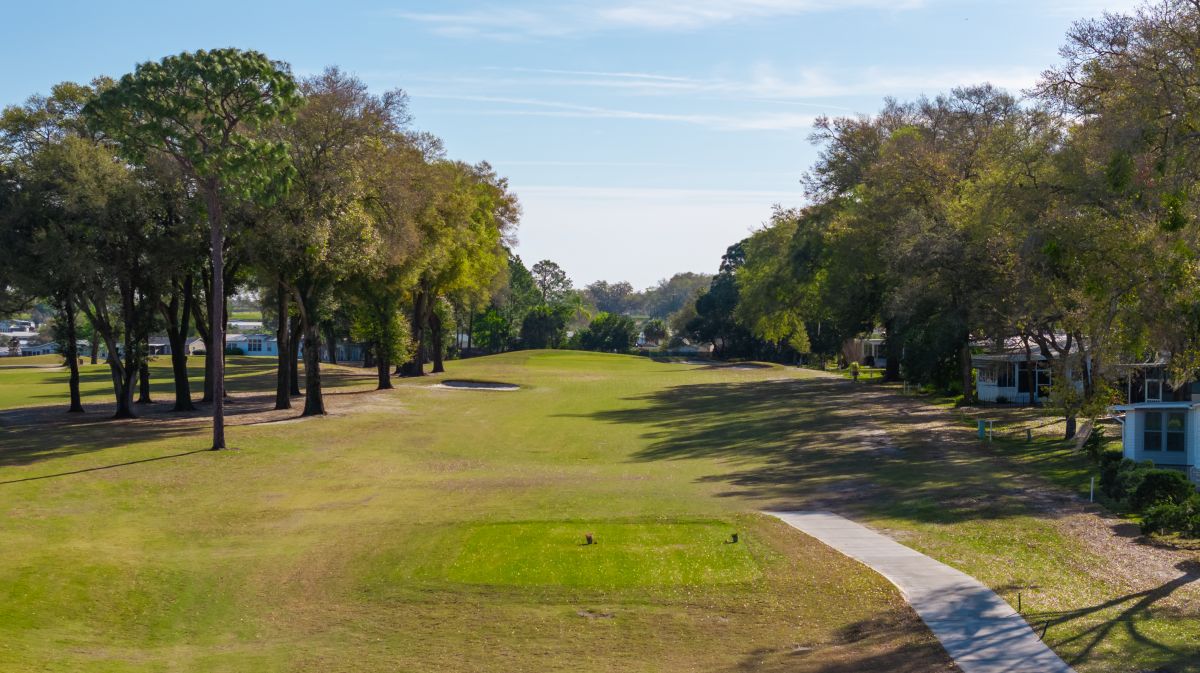
Water Oak Country Club Estates
216 Magnolia Drive, Lady Lake, FL 32159
A 300-acre golf and waterfront community where age-restriction policy is set locally, on top of the same federal framework every 55+ community follows.
View Community
Imperial Oaks
11440 Causeway Blvd, New Port Richey, FL 34654
A smaller, quieter manufactured home community where occupancy and guest policies are easy to review directly with management before buying.
View Community
The Highlands at Scotland Yards
9420 US Hwy 301, Dade City, FL 33525
A premier golf community with published age-qualification and occupancy guidelines available before you tour or buy.
View Community
Crystal River Village
1801 SE Hwy 19, Crystal River, FL 34429
A pet-friendly, waterfront community with clearly stated age-restriction policies for buyers weighing family residency questions.
View Community
Four Lakes Golf Club
990 La Quinta Blvd, Winter Haven, FL 33881
An 18-hole championship golf community that publishes its age-qualification standards clearly for prospective buyers and residents.
View CommunityThe Bottom Line
The 80/20 rule is a federal compliance threshold, not a resident's rulebook. It tells you how a community keeps its legal age-restricted status — it does not tell you whether your grandchild can move in, whether a caregiver is welcome, or what guest policies apply. Those answers live in each community's own HOA documents. Before you buy into any 55+ community, ask directly about occupancy and guest policies rather than assuming the 80/20 rule settles the question for you.